NASA Programs
Apollo Program
Saturn V, the Moon, and twelve astronauts who walked on another world.
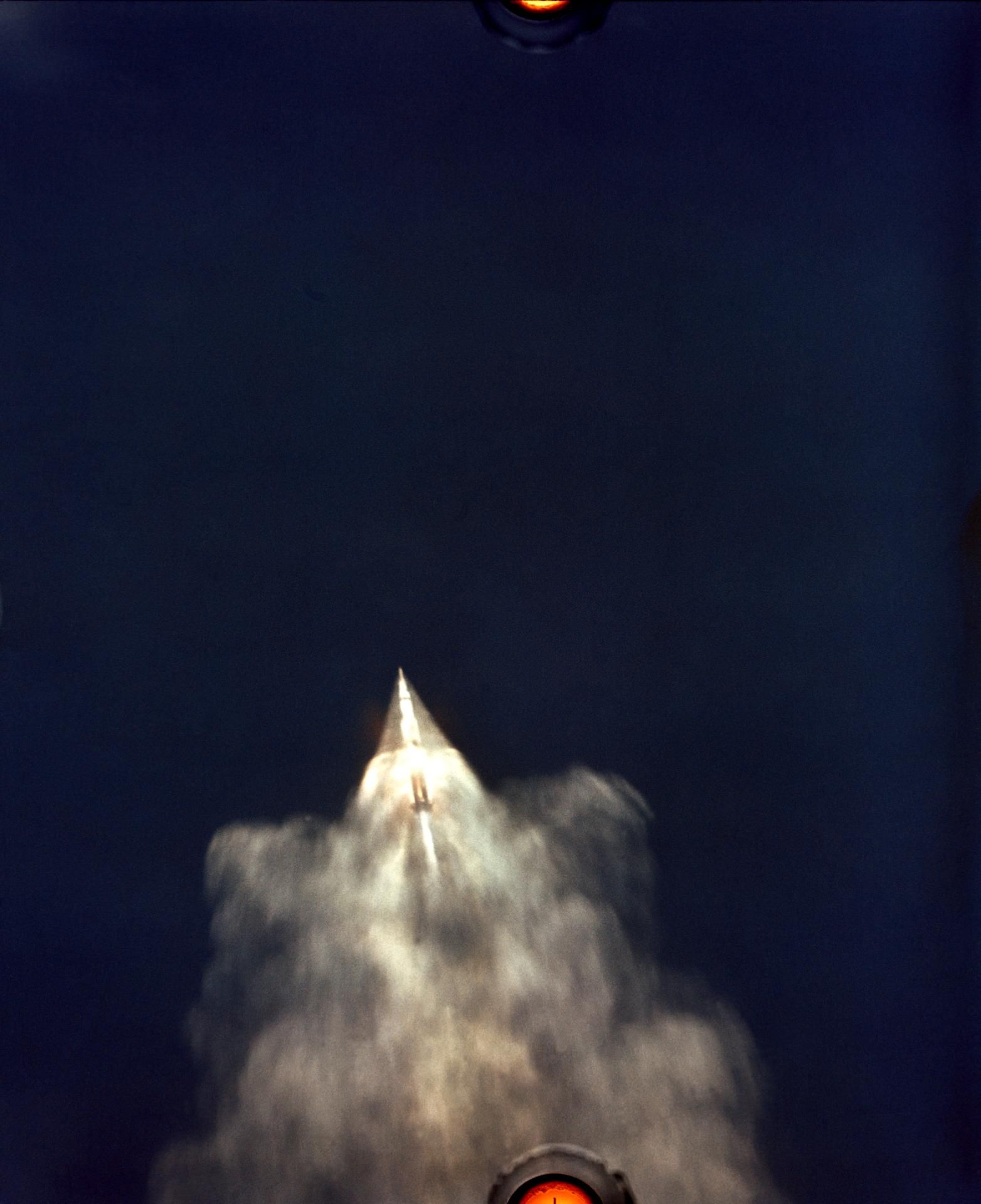
Apollo was NASA’s answer to President Kennedy’s 1961 goal: land a man on the Moon and return him safely before the decade ended. The program combined the Saturn family of rockets, a command and service module for the voyage, and a lunar module designed only for the Moon’s airless surface.
Tragedy came first. On 27 January 1967 a cabin fire during a ground test took the lives of Gus Grissom, Ed White and Roger Chaffee—Apollo 1. The spacecraft was redesigned. Apollo 7 proved the new command module in Earth orbit. Apollo 8 carried the first humans around the Moon at Christmas 1968. Apollo 11 landed Neil Armstrong and Buzz Aldrin in the Sea of Tranquility on 20 July 1969 while Michael Collins orbited overhead.
Five more landings followed. Apollo 13 never landed after an oxygen-tank failure, but the crew returned safely. Apollo 15–17 carried the Lunar Roving Vehicle. Apollo 17 closed the lunar program in December 1972. Twenty-four astronauts flew to the Moon; twelve walked on it.
ARIA’s original mission was woven into Apollo. Eight EC-135N Apollo Range Instrumentation Aircraft filled ocean tracking gaps during launch, Earth orbit and translunar injection, relaying voice and recording telemetry when ground stations could not see the spacecraft.
Milestones
- 1967-01-27Apollo 1 — A pad fire during a test takes the lives of Grissom, White and Chaffee.
- 1968-12-21Apollo 8 — Borman, Lovell and Anders become the first humans to leave Earth orbit and circle the Moon.
- 1969-07-16Apollo 11 — Armstrong and Aldrin land on the Moon on 20 July; Collins remains in lunar orbit.
- 1970-04-11Apollo 13 — An oxygen tank fails en route; the crew returns safely using the lunar module as a lifeboat.
- 1972-12-07Apollo 17 — The final lunar landing. Cernan and Schmitt explore Taurus-Littrow; the Blue Marble photograph is taken.
ARIA and this program
Apollo Range Instrumentation Aircraft (later Advanced Range Instrumentation Aircraft) supported NASA and DoD space and missile missions from 1968 onward. ARIA’s original charter was Apollo tracking; the fleet later supported later programs as well. Explore the ARIA History archive, the fleet, and The Space Race.
Summary original to flyARIA.com. Photograph: NASA. NASA images are generally not protected by copyright in the United States; credit does not imply endorsement.