NASA Programs
Ranger, Surveyor & Lunar Orbiter
Three robotic programs that mapped and soft-landed on the Moon ahead of Apollo.
Before astronauts could land, NASA needed close-up photographs, landing-site knowledge and proof that a soft landing was possible. Three programs did that work.
Ranger hard-landed cameras into the Moon, returning the first detailed television views before impact. After early failures, Ranger 7 succeeded in July 1964. Surveyor soft-landed beginning in 1966, proving the surface could support a spacecraft and sampling the soil. Lunar Orbiter mapped nearly the entire Moon from orbit in 1966–1967, giving Apollo planners the photographs they needed to choose landing sites.
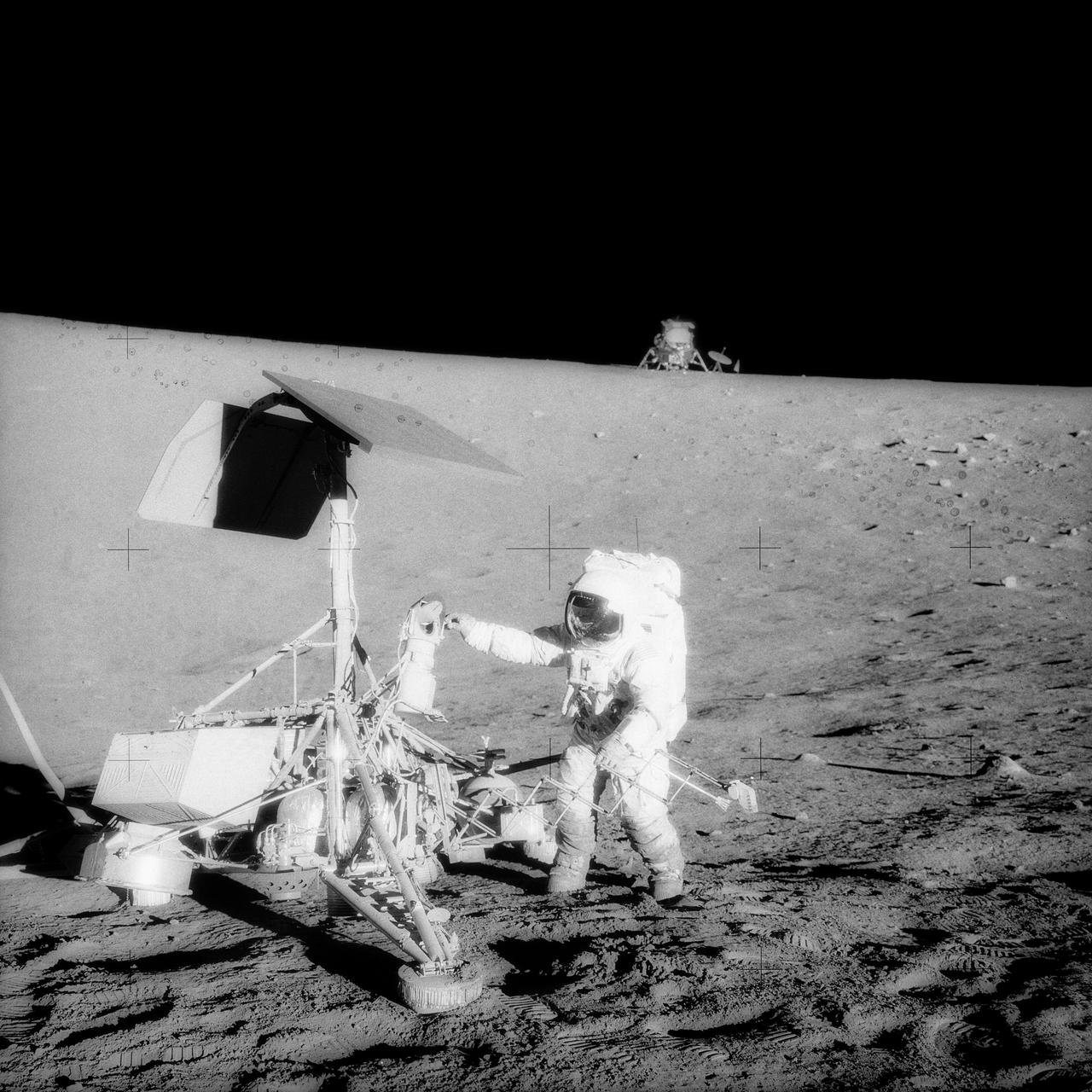
Apollo 12 later landed near Surveyor 3; Alan Bean photographed the dormant lander beside the lunar module—proof that robotic scouts and human explorers shared the same ground.
Milestones
- 1964-07-31Ranger 7 — First successful U.S. close-up lunar imaging before impact.
- 1966-06-02Surveyor 1 — First U.S. soft landing on the Moon.
- 1966–1967Lunar Orbiter — Five orbiters map the Moon for Apollo site selection.
- 1969-11-19Apollo 12 / Surveyor 3 — Astronauts visit Surveyor 3 at Oceanus Procellarum.
Summary original to flyARIA.com. Photograph: NASA. NASA images are generally not protected by copyright in the United States; credit does not imply endorsement.