NASA Programs
Magellan, Galileo & Cassini
Flagship orbiters that mapped Venus, explored Jupiter’s system, and lived at Saturn.
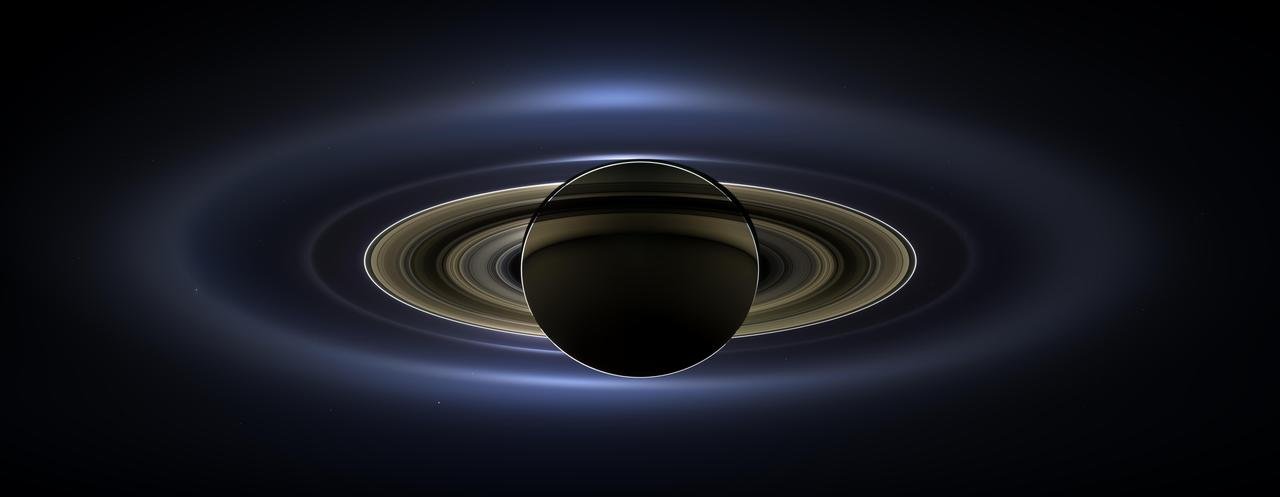
Three flagship missions defined a generation of planetary exploration after Voyager. Magellan launched from the Space Shuttle in 1989 and used radar to map nearly the entire surface of cloud-covered Venus. Galileo, also Shuttle-launched, orbited Jupiter from 1995 to 2003, dropped a probe into the atmosphere, and studied the Galilean moons—including evidence for a subsurface ocean at Europa.
Cassini–Huygens, a NASA/ESA/ASI partnership, arrived at Saturn in 2004. The European Huygens probe landed on Titan in 2005. Cassini spent thirteen years orbiting Saturn, flying through the gap between the rings and the planet in its final Grand Finale before a planned plunge into Saturn’s atmosphere in 2017 that protected the moons from contamination.
Together these missions set the standard for long-lived orbital science at other worlds.
Milestones
- 1990–1994Magellan — Radar maps of Venus reveal a surface reshaped by volcanism.
- 1995-12-07Galileo — Arrival at Jupiter; atmospheric probe descends the same day.
- 2005-01-14Huygens — First landing on Titan.
- 2017-09-15Cassini Grand Finale — Cassini ends its mission in Saturn’s atmosphere.
Summary original to flyARIA.com. Photograph: NASA/JPL-Caltech/SSI. NASA images are generally not protected by copyright in the United States; credit does not imply endorsement.