NASA Programs
Voyager Program
Grand Tour of the outer planets—and humanity’s farthest working spacecraft.
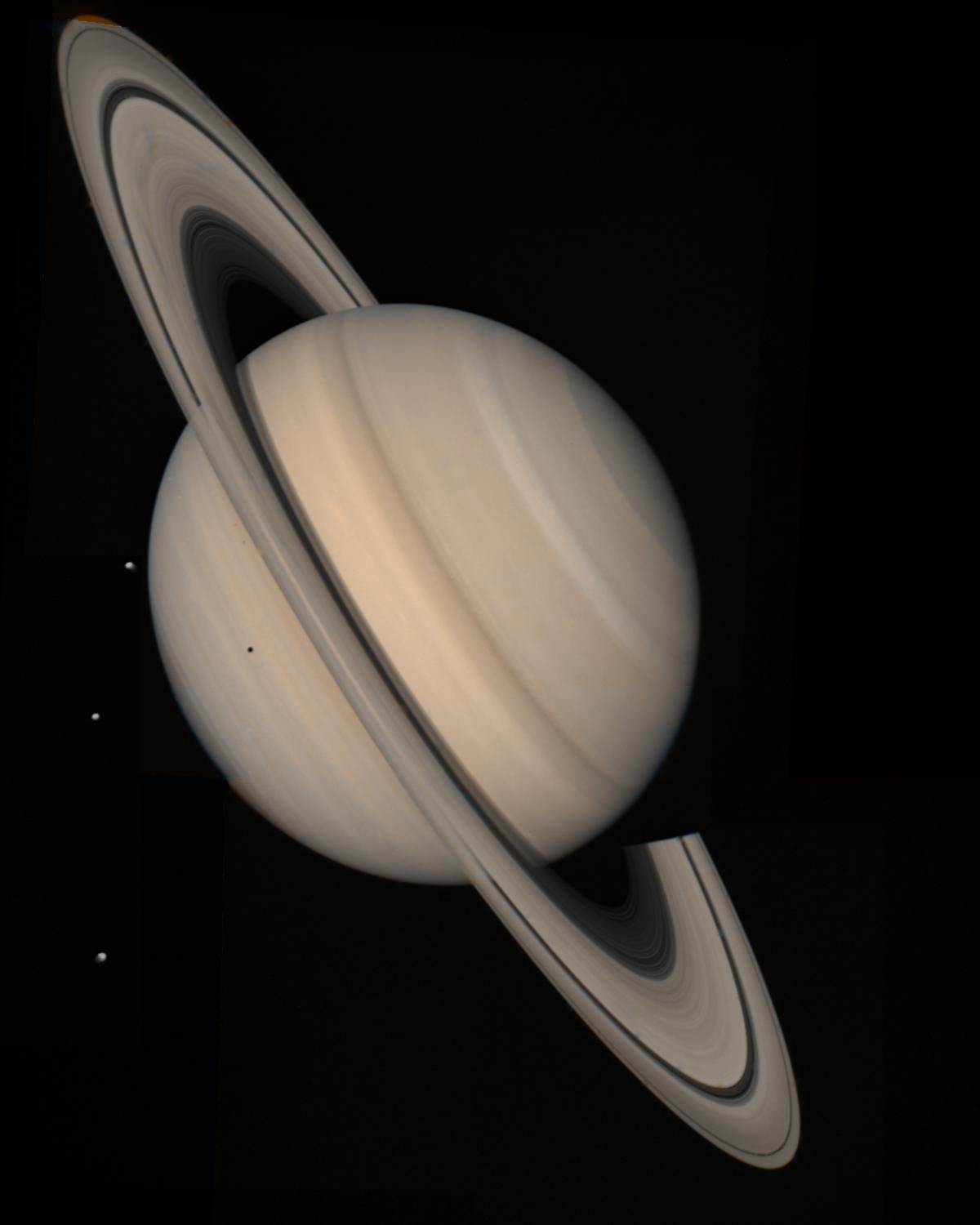
Voyager 1 and Voyager 2 launched in 1977 to take advantage of a rare alignment of the outer planets. Voyager 1 flew past Jupiter and Saturn. Voyager 2 visited Jupiter, Saturn, Uranus and Neptune—the only spacecraft to have done so.
Their cameras and instruments revealed active volcanoes on Io, a thick atmosphere on Titan, the rings and moons of Uranus and Neptune in detail, and countless other discoveries. Both spacecraft carried the Golden Record, a phonograph message for any future finders.
Decades later both Voyagers continue to return data from interstellar space. Voyager 1’s Pale Blue Dot portrait of Earth, taken in 1990 at Carl Sagan’s request, remains one of the program’s most famous images.
Milestones
- 1977Launches — Voyager 2 launches in August; Voyager 1 in September.
- 1979–1981Jupiter and Saturn — Both spacecraft transform knowledge of the gas giants and their moons.
- 1986 / 1989Uranus and Neptune — Voyager 2 completes the Grand Tour.
- 1990-02-14Pale Blue Dot — Voyager 1 looks back at Earth from beyond Neptune.
Summary original to flyARIA.com. Photograph: NASA/JPL. NASA images are generally not protected by copyright in the United States; credit does not imply endorsement.