NASA Programs
Constellation Program
A post-Shuttle architecture for the Moon—and the Orion spacecraft that outlived the program.
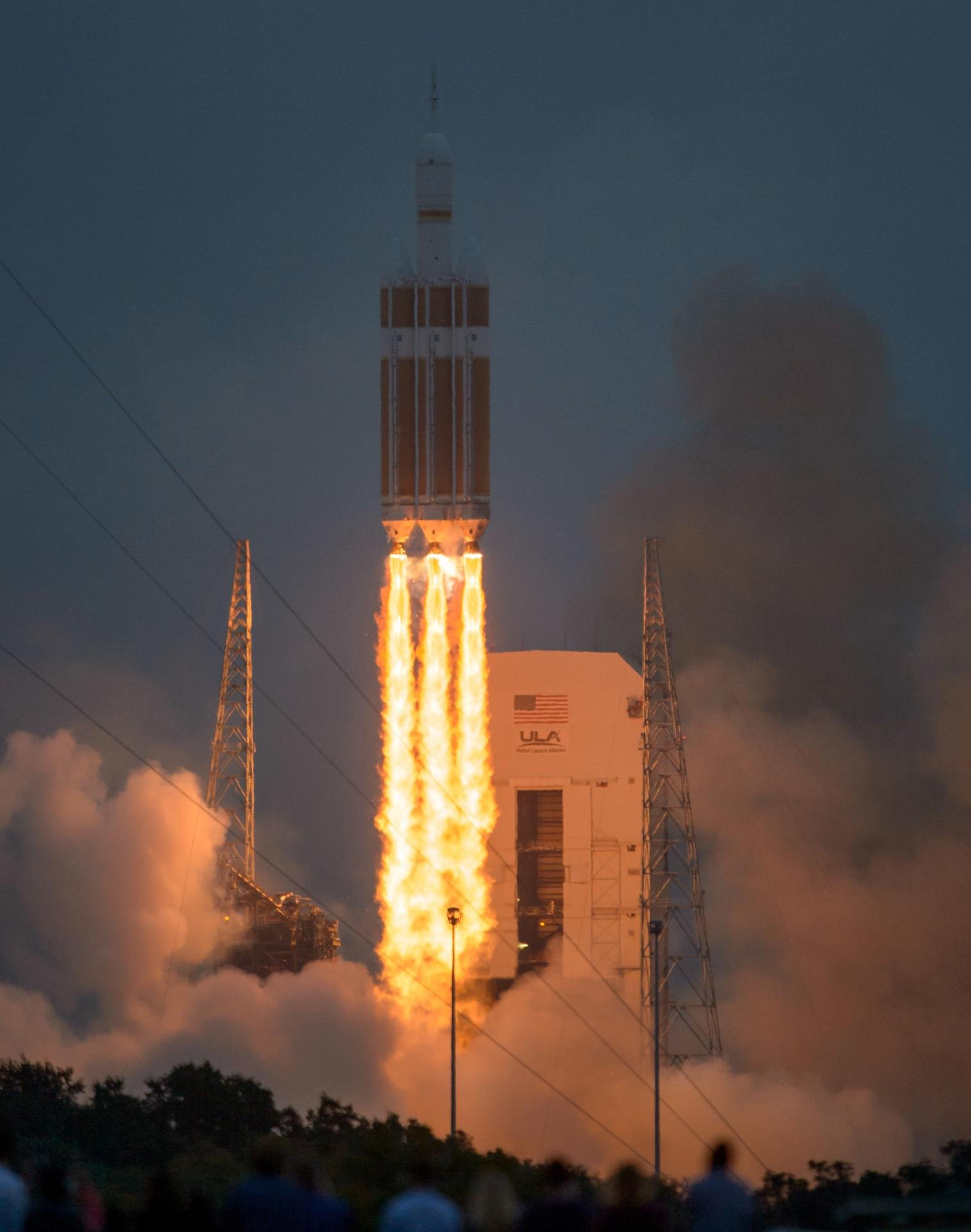
The Constellation Program was NASA’s plan, announced in 2005, to replace the Space Shuttle with new vehicles for low Earth orbit and a return to the Moon. It centered on the Ares I crew launcher, the heavy-lift Ares V, the Orion crew capsule, and Altair lunar landers.
Budget pressure and changing national priorities led to the program’s cancellation in 2010. Hardware and design work did not vanish. Orion continued under a new exploration framework. The Space Launch System later took on the heavy-lift role. Exploration Flight Test-1 in December 2014 sent an uncrewed Orion around Earth on a Delta IV Heavy, testing heat shield and reentry performance.
Constellation is remembered as a bridge: a cancelled architecture whose crew vehicle and lessons carried forward into Artemis.
Milestones
- 2005Program start — NASA begins Constellation as the Shuttle replacement and lunar-return architecture.
- 2010Cancellation — The program is cancelled; Orion and related work continue under new plans.
- 2014-12-05EFT-1 — An uncrewed Orion flies on a Delta IV Heavy and splashes down after two orbits.
Summary original to flyARIA.com. Photograph: NASA. NASA images are generally not protected by copyright in the United States; credit does not imply endorsement.