NASA Programs
Space Shuttle Program
The world’s first reusable crewed orbital spacecraft: 135 missions over thirty years.
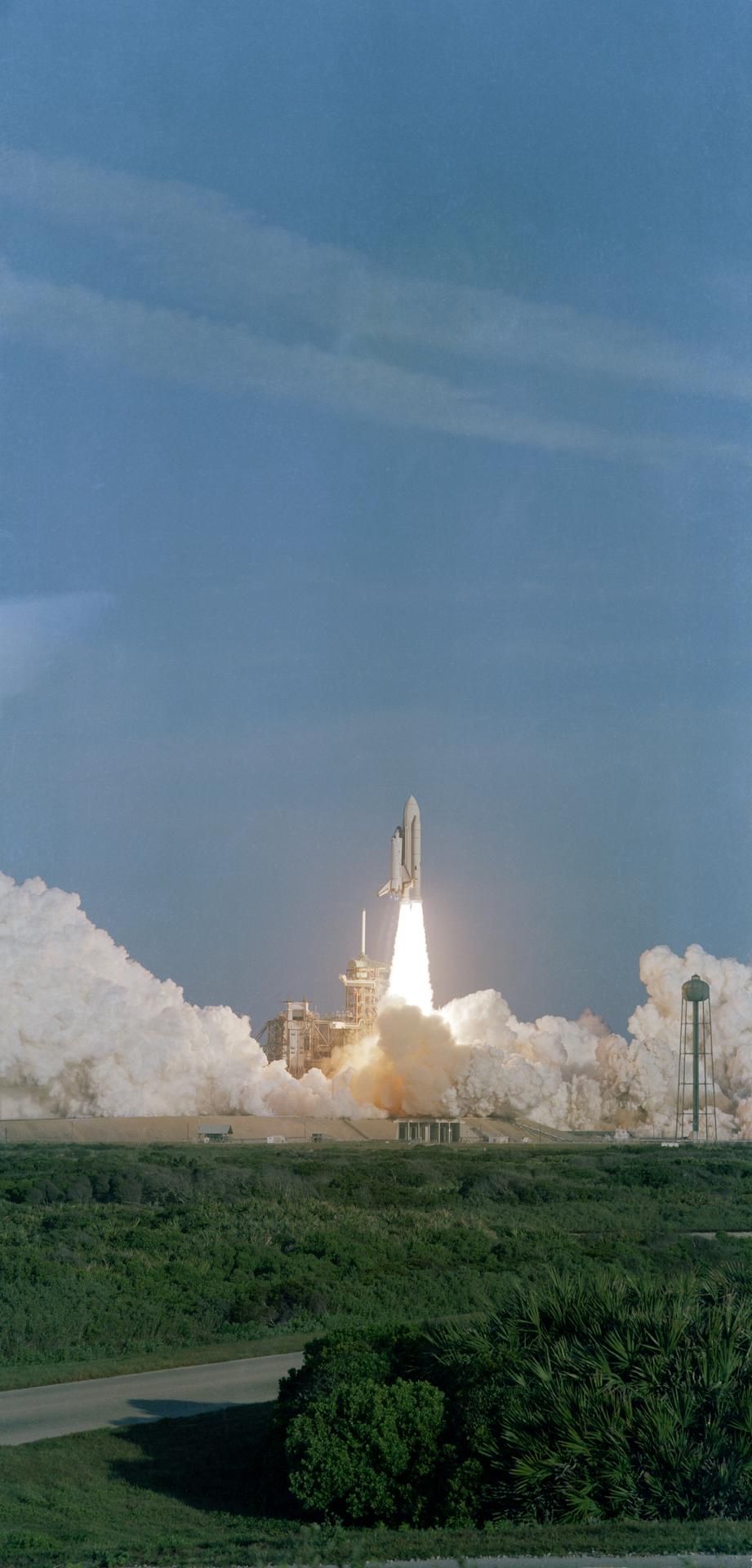
The Space Shuttle—officially the Space Transportation System—was built to fly often, return to a runway, and carry both crews and large cargo. Five orbiters flew in space: Columbia, Challenger, Discovery, Atlantis and Endeavour. Enterprise was used for approach and landing tests and never went to orbit.
STS-1 launched Columbia on 12 April 1981 with John Young and Robert Crippen aboard, twenty years to the day after Yuri Gagarin’s flight. Over the next three decades the Shuttle deployed satellites and planetary probes, carried Spacelab and later Spacehab modules, serviced the Hubble Space Telescope, and assembled large parts of the International Space Station.
Two tragedies marked the program. Challenger was lost 73 seconds after launch on 28 January 1986; Columbia broke apart during reentry on 1 February 2003. After each accident the fleet stood down while hardware and procedures were rewritten. The final flight, STS-135 on Atlantis, landed on 21 July 2011, closing a 30-year era of U.S. winged orbital flight.
Milestones
- 1981-04-12STS-1 — Columbia makes the first Shuttle flight.
- 1986-01-28Challenger — Challenger is lost 73 seconds after liftoff; all seven aboard perish.
- 1990-04-24Hubble deployment — Discovery carries the Hubble Space Telescope to orbit on STS-31.
- 2003-02-01Columbia — Columbia is lost during reentry at the end of STS-107.
- 2011-07-08STS-135 — Atlantis flies the final Shuttle mission.
ARIA and this program
Apollo Range Instrumentation Aircraft (later Advanced Range Instrumentation Aircraft) supported NASA and DoD space and missile missions from 1968 onward. ARIA’s original charter was Apollo tracking; the fleet later supported later programs as well. Explore the ARIA History archive, the fleet, and The Space Race.
Summary original to flyARIA.com. Photograph: NASA. NASA images are generally not protected by copyright in the United States; credit does not imply endorsement.