NASA Programs
Skylab
America’s first space station, built from a leftover Saturn stage and lived in by three crews.
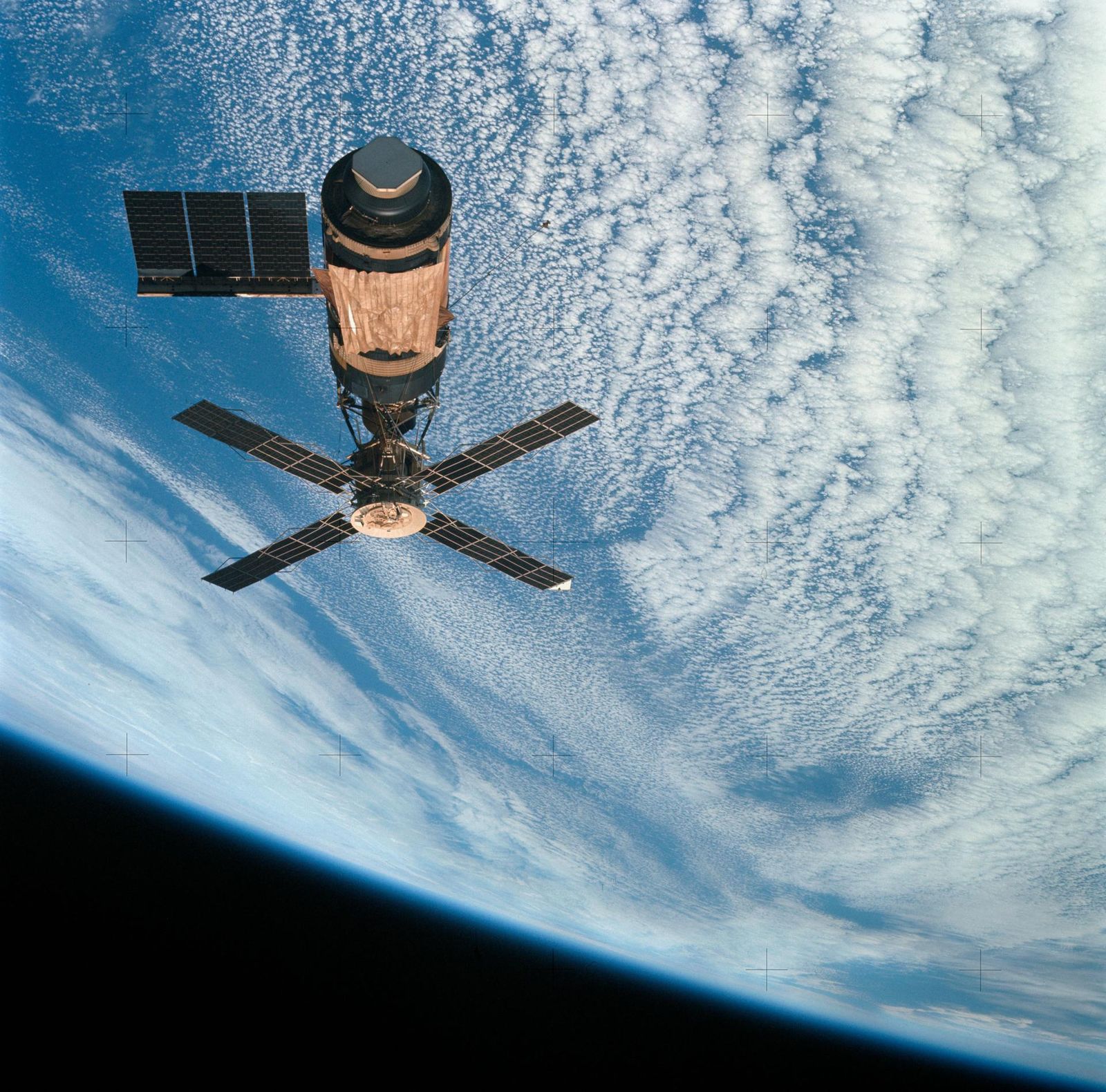
Skylab was NASA’s first space station. It was launched unmanned on 14 May 1973 atop the last Saturn V to fly. A workshop built from an empty Saturn S-IVB stage gave crews room to live and work for weeks at a time—far longer than any Apollo lunar mission.
Launch damage tore away a micrometeoroid shield and one solar wing. The first crew, launched on a Saturn IB eleven days later, deployed a sunshade and freed the remaining wing, saving the station. Three crews lived aboard Skylab during 1973 and 1974, studying the Sun with an Apollo Telescope Mount, adapting to long-duration weightlessness, and proving that people could work productively in orbit for months.
After the last crew left in February 1974, Skylab was left in a slowly decaying orbit. It reentered over Australia in July 1979. Plans to boost it with an early Space Shuttle mission never came to pass.
Milestones
- 1973-05-14Skylab launch — The station reaches orbit on the final Saturn V; launch damage nearly ends the program.
- 1973-05-25Skylab 2 — The first crew repairs the station and begins a 28-day occupation.
- 1973-11-16Skylab 4 — The third and final crew stays 84 days—an American endurance record at the time.
ARIA and this program
Apollo Range Instrumentation Aircraft (later Advanced Range Instrumentation Aircraft) supported NASA and DoD space and missile missions from 1968 onward. ARIA’s original charter was Apollo tracking; the fleet later supported later programs as well. Explore the ARIA History archive, the fleet, and The Space Race.
Summary original to flyARIA.com. Photograph: NASA. NASA images are generally not protected by copyright in the United States; credit does not imply endorsement.